
Economic Development Journal - Fall 2021
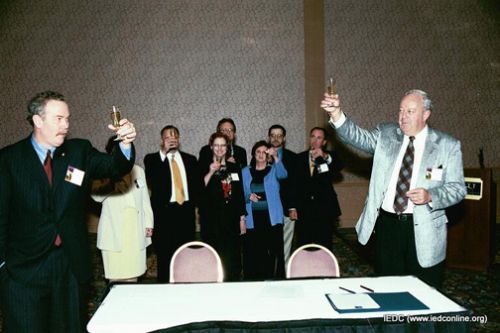 Happy 95th Anniversary: Remembering the Past to Build the Future
by Joan M. Fuchsman and Emily Brown
IEDC traces its beginnings back to 1926, with the gathering that became the American Economic Development Council. After World War II, another group emerged, calling themselves the Council for Urban Economic Devel-opment (CUED). The merger of the two in 2001 gave birth to the International Economic Development Council (IEDC). Since then, IEDC has grown membership and services including more conferences, educational opportuni-ties, research capabilities, and advocacy. Since Hurricane Katrina, IEDC has become a leader in responding to local economic development needs post-disaster, utilizing this experience to help its members address COVID-19.
 35 Years of Leadership: Jeff Finkle’s Legacy
by Emily Brown and Haley Cappone
Jeff Finkle has served as IEDC’s president and CEO for 20 years and led CUED for 15 years. Hailing from Ohio with an interest in politics and public service, he spent five years at the U.S. Department of Housing and Urban Development, serving over two years as Deputy Assistant Secretary. His journey at IEDC began when he was hired to head the Council for Urban Economic Development (CUED). Spearheading the merger between CUED and the American Economic Development Council, Jeff stepped into the leadership role at the newly-formed IEDC in 2001. Since then, the organization has grown, adding additional staff, conferences, and programs all in service to economic development.
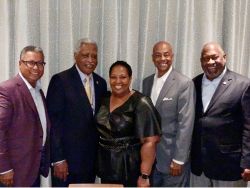 Racial Inclusion and Equity: Its History at IEDC
by Joan M. Fuchsman
Racial diversity in volunteer leadership and staff has been a core value of IEDC from its inception. That value is evident in the people elevated to serve at its highest level – as board members and chairs – who in turn paved the way for more people of color to follow as leaders in the profession. Diverse leadership has brought many benefits to IEDC, its members and their communities, and laid the foundation for IEDC’s ongoing initiatives to directly address racial equity in economic development practices.
Trailblazers: A History of Women Leaders in IEDC and Its Predecessors
by Joan M. Fuchsman
Women began to enter the economic development profession in earnest in the 1970s and 1980s. Since then, economic development has continued to evolve from a male-dominated profession to one with more and more women leaders. Accordingly, IEDC – and its predecessors, AEDC and CUED – aimed to ensure that women were represented at the board and chair levels. These early women leaders blazed a trail for others to follow, enriching the organization, the profession, and communities.
International Connections: Cross-Border Exchange and Information Dissemination Are Key to IEDC’s Mission
by Joan M. Fuchsman and Shari Nourick
IEDC’s connections to other associations, organizations, and agencies across the globe have bolstered its reputa-tion as a clearinghouse for economic development expertise. These cross-border partnerships have been valuable to IEDC’s members over the years, enabling practitioners to learn about new approaches and share contacts, vital resources, and guidance on issues ranging from entrepreneurship, trade and investment, and disaster recovery.
SITE MAP
Back to top